Thesis
AI-based detection and tracking of individual animal interactions using camera-trap.
PhD in Computer science at the University of Montpellier (January 2024 - December 2026).
Keywords: Animal re-identification, Camera traps, Dog re-identification, Deep learning, Domain generalization, Wildlife monitoring.
Director: Marc Chaumont - Associate professor at the University of Southern Brittany and Researcher at the IRISA and at the LIRMM.
Co-director Michel De Garine-Wichatitsky - Researcher at the CIRAD UMR ASTRE research unity.
Co-supervisor: Gérard Subsol - CNRS Researcher at the LIRMM.
Co-supervisor: Hélène Guis - Researcher at the CIRAD UMR ASTRE research unity.
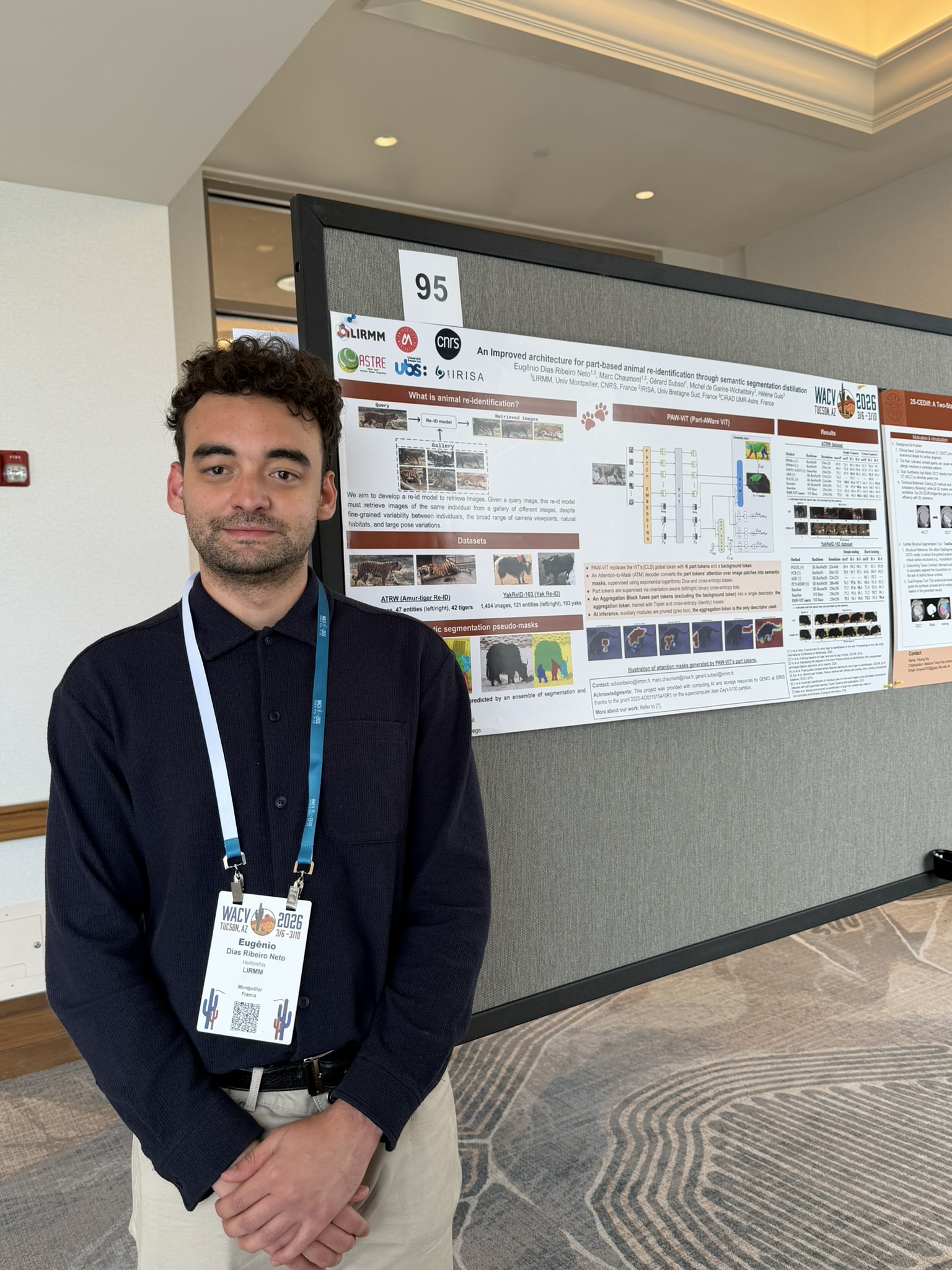
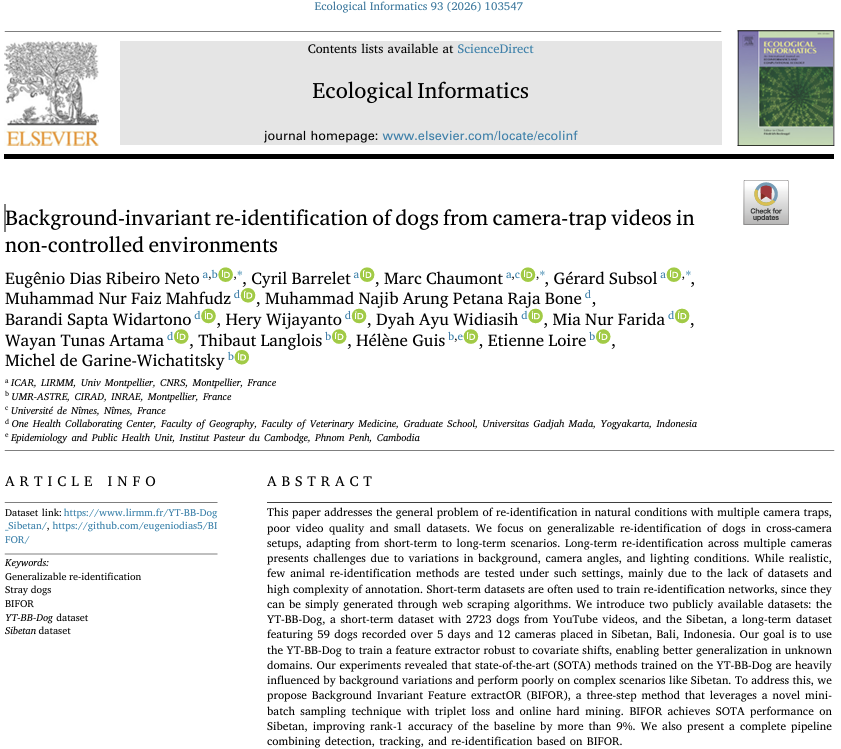
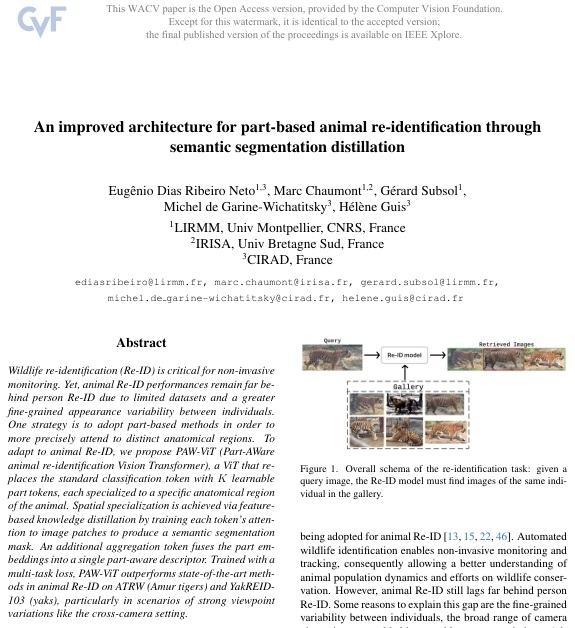
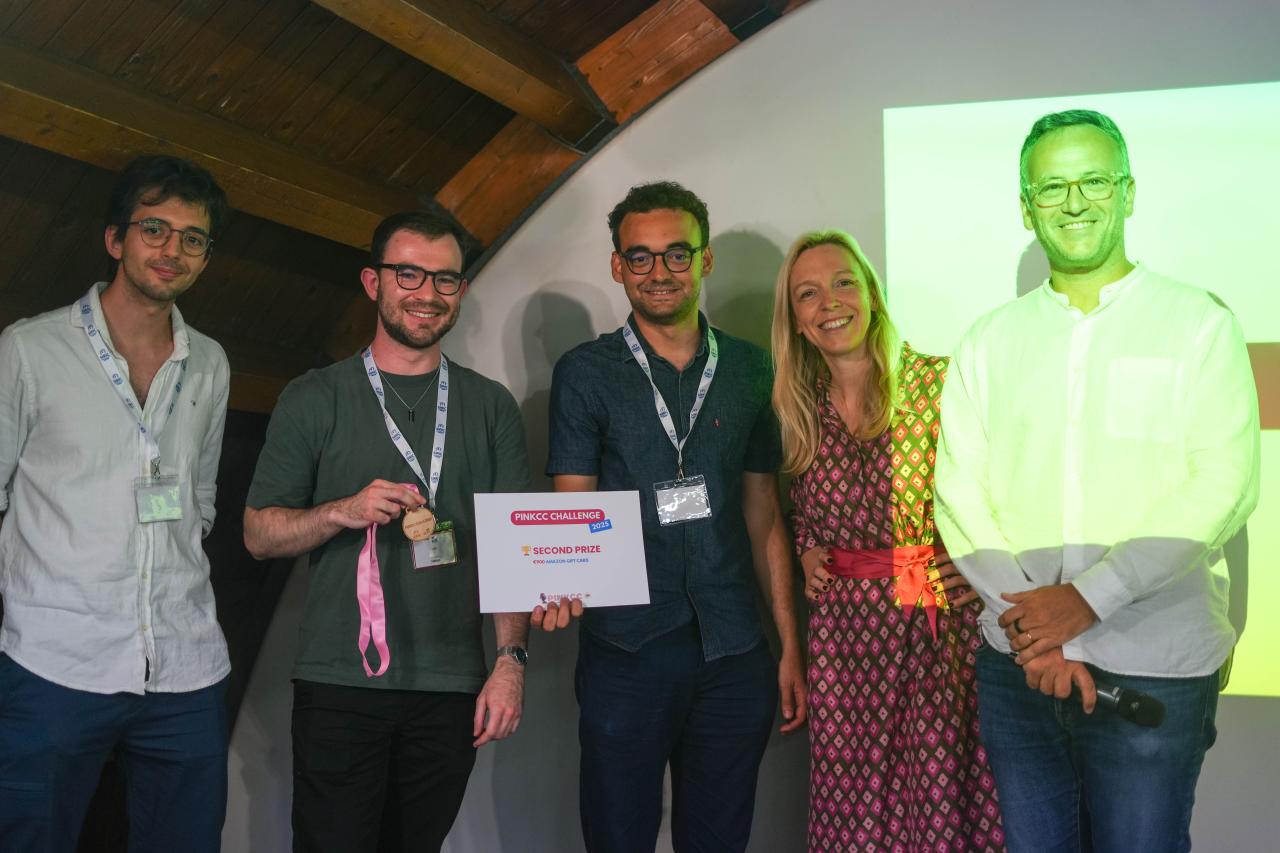
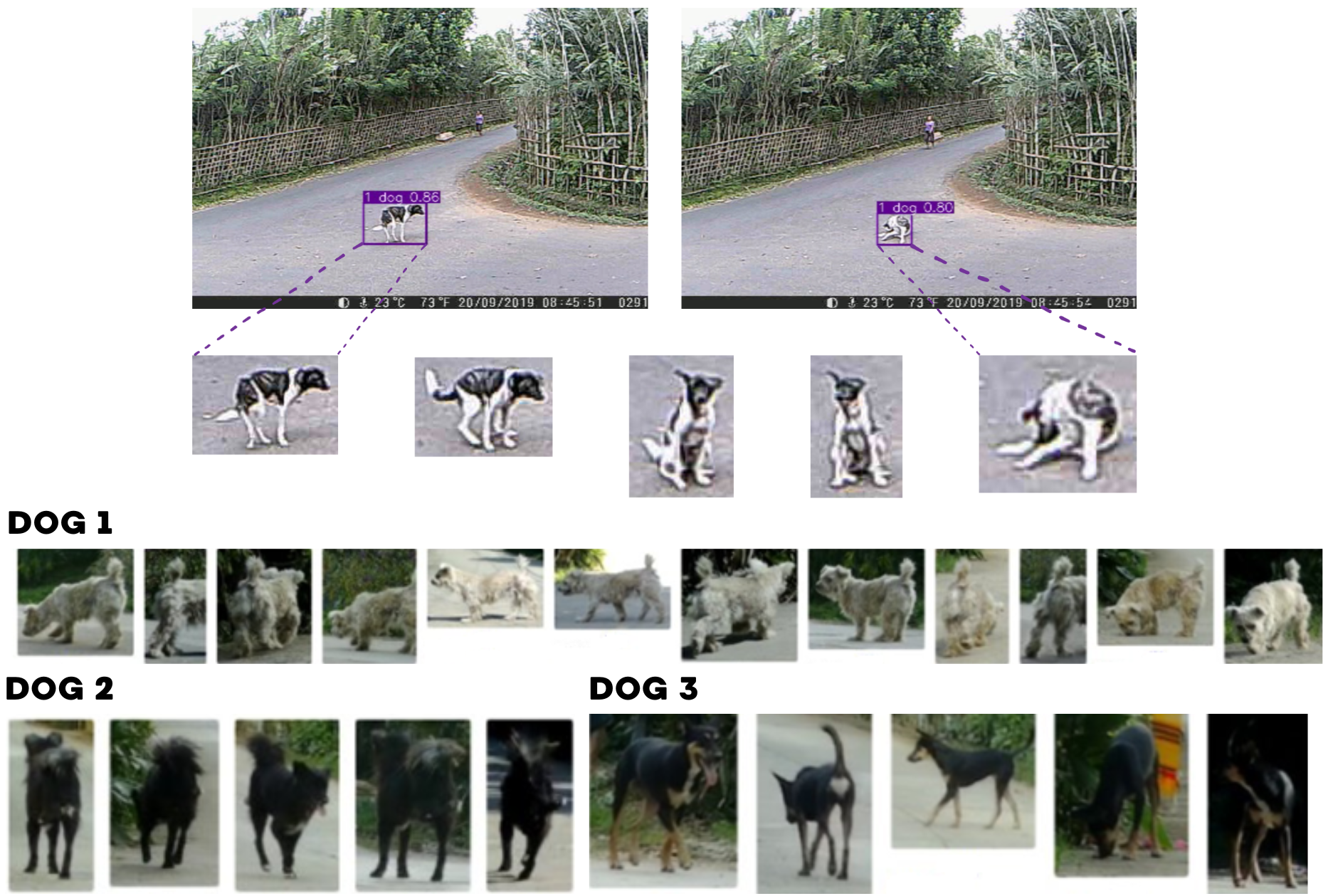
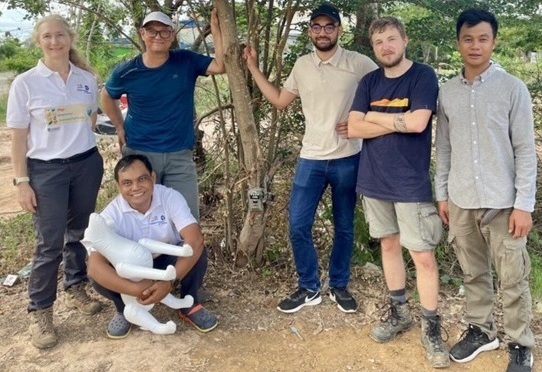
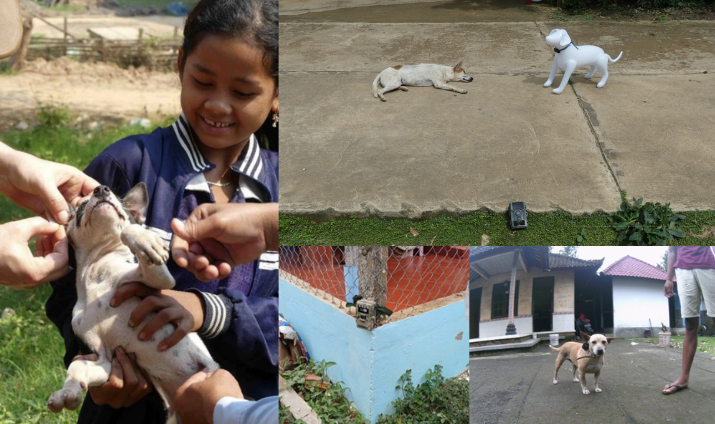
I am currently in my 3rd (and last) year of PhD at the I2S doctoral school of the University of Montpellier. I am based at the ICAR team of the LIRMM laboratory. I am also affiliated to the CIRAD UMR ASTRE research unity.
My thesis is part of the SEAdogSEA, an interdisciplinary project between french and asian research institutions. The goal of the project is to study the contact patterns between dogs and their habitat to better comprehend their behavior and role as zoonotic disease transmitters. To this end, camera-traps were installed across three Asian countries, more specifically, Indonesia, Thailand and Cambodia. The thesis focuses on the development of an AI-based pipeline to automate the analysis of the large volumes of data generated by the camera-traps, with a particular focus on re-identification.
Please check the resume of the thesis below and our publications.
Resume of the thesis
The study of interactions between animals in their natural environment is essential for understanding disease transmission dynamics and for designing effective conservation and epidemiological control strategies. In recent years, camera trap networks have produced large volumes of video footage, but analyzing interactions between individuals of a given species requires processing massive amounts of data, which remains a major bottleneck.
This thesis presents an automated video-processing pipeline based on artificial intelligence algorithms, organized around three main stages: detection of individuals of a given species, multi-object tracking within a video sequence, and re-identification (Re-ID), that is, recognizing the same individual across different sequences captured either by the same camera trap at a different time or by another camera trap in the network.
Our work focuses on Re-ID in the wild conditions (less studied in the literature) characterized by large variations in viewpoint and illumination, occlusions, cluttered backgrounds, and, more generally, the substantial appearance changes that occur when camera traps are redeployed at the same location during acquisition campaigns separated by several months.
Our approach is developed and validated on free-roaming dogs filmed in Southeast Asia, a setting of high epidemiological relevance, while being designed to extend naturally to quadrupeds in general. Our first contribution addresses the lack of suitable datasets. We release two resources to the community: YT-BB-Dog, the largest dog Re-ID dataset to date (more than 2,700 individuals automatically extracted from YouTube videos), and SEAdogSEA-Indonesia, a multi-camera dataset spanning three years, comprising 183 dogs recorded by 47 camera traps over four acquisition sessions in an Indonesian village, enriched with geographic and socio-ecological metadata validated by both specialists and the dogs' owners.
Based on these datasets, we propose two new methods for animal Re-ID. BIFOR (Background-Invariant Feature extractOR) is a three-stage training procedure based on a novel mini-batch sampling strategy, designed to mitigate the domain shift that arises in domain-generalizable Re-ID, where a model trained on a source dataset must perform well on an unseen target domain. We then introduce PAW-ViT (Part-AWare animal re-identification Vision Transformer), which replaces the standard class token of a ViT with K body-part tokens. Each additional token specializes in a specific anatomical region through knowledge distillation from semantic segmentation, within a multi-task learning framework. The part tokens are then fused by an additional aggregation token into a single descriptor that, by construction, weights each part according to its visibility in the image and its importance for Re-ID. Both methods outperform state-of-the-art baselines, particularly in uncontrolled cross-camera scenarios. PAW-ViT further confirms the broader applicability of our framework to quadrupeds, achieving state-of-the-art results on datasets such as ATRW (Amur tigers) and YakReID-103 (yaks).
Finally, we benchmark our two methods together with a wide range of state-of-the-art algorithms on SEAdogSEA-Indonesia, in order to evaluate Re-ID performance in a realistic open-set scenario (no prior information is available about which individuals may reappear across campaigns) and over the long term (with individuals and environments evolving across years). This study covers the entire pipeline, from raw camera-trap footage to contact networks, providing a realistic framework intended for use by ecologists and epidemiologists.
Additional contributions
- I helped the planning and supervision of four internships based on my thesis subject.
- With my colleagues Guillaume Fourret and Guillaume Picaud, both PhD students at the LIRMM, our team was placed 2nd out of 250 participants in the PINKCC international challenge of ovarian cancer segmentation.
- I was reviewer for the International Journal of Computer Vision and the journal Multimedia Tools and Applications.
- I worked closely with international researchers from France and Southeast Asia.