EDR Neto, M Chaumont, G Subsol, M de Garine-Wichatitsky, H Guis
IEEE/CVF Winter Conference on Applications of Computer Vision (WACV)
·
2026
33% acceptance rate. Submitted and accepted in round 2 - 26% acceptance rate
We propose PAW-ViT (Part-AWare Vision Transformer), a novel animal re-identification architecture that guides vision transformer attention through semantic segmentation distillation during training. We achieve state-of-the-art performance on two animal re-identification benchmarks, particularly in challenging cross-camera scenarios. This work was presented by me at the WACV 2026 in Tucson, USA (if you search for the city's photos, you will understand the cactus emoji :)). Check the paper, video, poster, and code implementation using the links below.
EDR Neto, C Barrelet, M Chaumont, G Subsol, MNF Mahfudz, MNAPR Bone, BS Widartono, H Wijayanto, DA Widiasih, MN Farida, WT Artama, T Langlois, H Guis, E Loire, M de Garine-Wichatitsky
Ecological Informatics
·
2025
Impact factor: 7.3
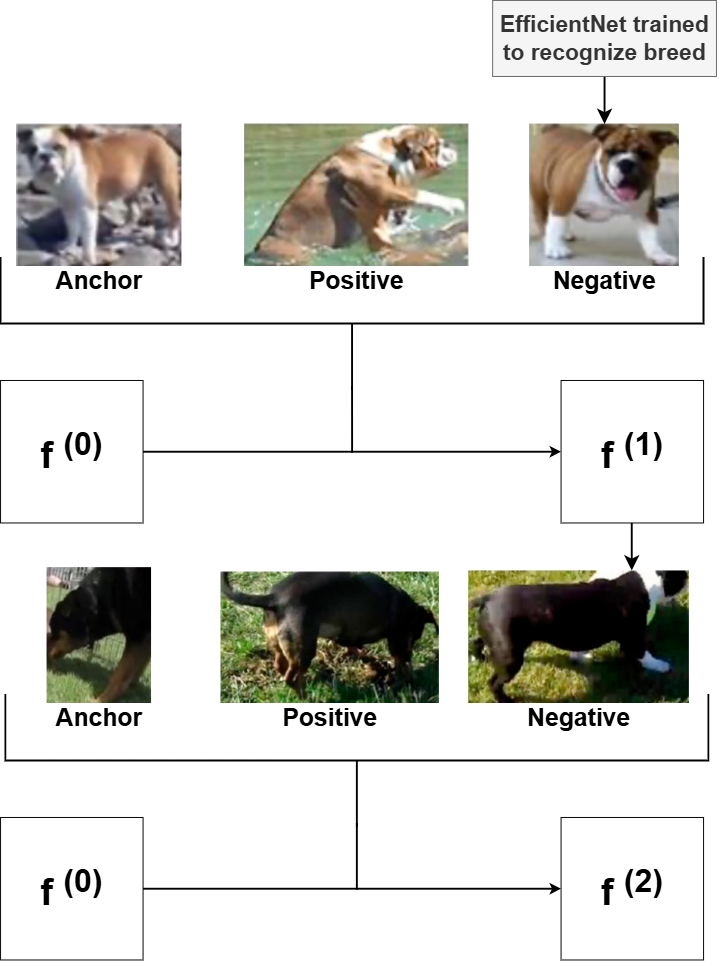
We propose BIFOR (Background Invariant Feature extractOR), a training strategy designed to reduce background influence for generalizable dog Re-ID. BIFOR achieves state-of-the-art cross-domain performance. We released two datasets that are, to date, the largest dog re-identification datasets in literature: the YT-BB-Dog that contains more than 2,700 dogs, and the Sibetan dataset, the first long-term dog re-identification dataset featuring 59 dogs and one week of cross-camera recordings. Paper, datasets, and code implementation are available below.
C Barrelet, EDR Neto, M Chaumont, G Subsol, M de Garine-Wichatitsky, E Loire
Francophone Conference on Signal and Image Processing (GRETSI)
·
2023
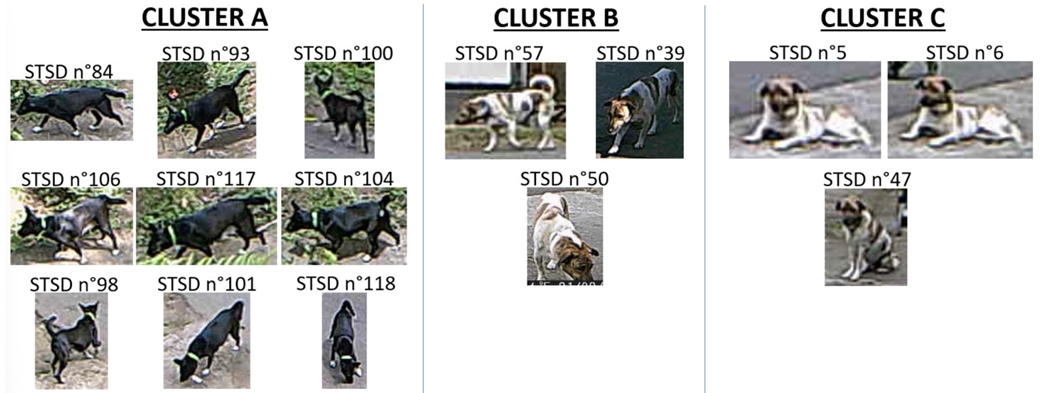
Preliminary study in dog re-identification that led to our paper published at Ecological Informatics. This paper was written based on the work developed during my master's four-months internship at the LIRMM. This work was presented by Cyril Barrelet and Marc Chaumont at the GRETSI conference in Grenoble, France.
SEAdogSEA-Indonesia: A long-term dog re-identification dataset and benchmark
In preparation...
Introducing the largest long-term dog re-identification dataset, comprising camera-trap images spanning four years of capture in Indonesia. Furthermore, the dataset has the highest metadata variability among existing animal re-identification datasets. We introduce a rigorous new benchmark designed to evaluate model generalization across both diverse scenarios and temporal changes.